
Open Door Selling House: The Complete Guide to Selling Your Home via iBuyer
Selling your home using the “open door” method, commonly referring to iBuyer platforms like OpenDoor, is a relatively new alternative to the traditional real estate listing route. Instead of listing your property, inviting showings, and waiting for buyers, an iBuyer may provide you with a cash offer quickly, simplify closing, and take on the burden of resale.
This guide walks you through everything you need to know about open-door house selling: how it works, the technology behind it, key advantages and tradeoffs, real-world examples, practical use cases, and FAQs. By the end, you’ll understand whether this option is right for your specific situation.
What “Open Door Selling House” Means
When people refer to “open door selling house,” they are often referencing the iBuyer model, particularly the company OpenDoor (or similar instant buyer platforms). In that model, homeowners submit their property details, receive a cash or near-cash offer, and if accepted, the company buys the home directly, often without requiring you to stage, show, or negotiate with multiple buyers.
This contrasts with the traditional route: hire an agent, list the home, host open houses, entertain offers, negotiate, inspect, wait for financing, and close. The iBuyer route seeks to compress or eliminate many of those steps.
The concept is powered by data, algorithmic valuation, and streamlined operational workflows. OpenDoor, for example, purchases homes directly, handles inspection and repairs, and then resells them.
OpenDoor is among the earliest and most recognized iBuyers. It operates in dozens of U.S. markets, making cash offers to qualified sellers, then performing necessary refurbishments and relisting.
It’s crucial to understand that OpenDoor is not just a listing service. It becomes the buyer. That means you trade potential upside from bidding wars for certainty, speed, and convenience.
The phrase “open door selling house” can also more loosely mean selling your home via instant-offer platforms, not only specifically OpenDoor. But for clarity, this article will use it as shorthand for the iBuyer / OpenDoor model of home sale.
The iBuyer / OpenDoor Process in Depth
Selling via an iBuyer or via OpenDoor generally follows these stages, each with specific features, checks, and tradeoffs.
Submission and Valuation
First, you, as a homeowner, submit property data: address, square footage, condition, number of rooms, year built, and sometimes photos or prior disclosure reports. This allows the algorithm to generate a preliminary estimate.
OpenDoor and similar platforms use automated valuation models (AVMs) fed by vast datasets: recent comparable sales, regional pricing trends, local market conditions, and property features.
Because the algorithm must generalize across many homes, it tends to favor more standard, mid-market properties. Unusual homes, heavily altered homes, or those in nonstandard neighborhoods may get more conservative offers or be rejected.
Once the algorithm suggests a value, the iBuyer presents an offer. In optimal cases, this happens within 24 to 48 hours.
Inspection, Adjustments, and Final Offer
If you accept the preliminary offer, the next step is a property inspection. Inspectors identify any flaws, repair needs, or condition issues. Based on that, the offer may be adjusted downward to account for repair costs.
The final offer, after adjustments, is presented. At that point, you either accept or decline. If accepted, you move into closing. Because the iBuyer is the buyer, there’s no bidding war or counteroffers from multiple parties.
Closing & Payment
A closing date is set according to a timeline you agree upon, often within days or weeks. Paperwork, title transfers, escrow, and other formalities follow. You receive net proceeds (after fees and deductions) at closing.
The iBuyer then assumes responsibility for any required repairs, updates, and relisting efforts. They aim to flip or resell the home to recover costs and ideally earn a profit.
Because they take ownership, the iBuyer bears the risk of resale, holding costs, market fluctuation, and renovation overruns.
Pros and Cons of the OpenDoor / iBuyer Model
Understanding both sides is critical before deciding whether “open door selling house” is right for you.
Advantages
Speed & Certainty
One of the primary draws is that you can often get a cash offer in 24–48 hours and close in days or weeks rather than months. This predictability of timing is a major advantage for sellers needing certainty.
No buyer financing contingencies, fewer negotiations, and reduced risk of deals falling through help reduce stress and uncertainty.
Reduced Hassle
You avoid prepping, staging, hosting showings, and entertaining multiple prospective buyer tours. This is especially valuable if your property is occupied or you want a hands-off experience.
The iBuyer handles many operational burdens: repairs, marketing, and resale. You, as the seller, skip much of that.
Flexibility & Control
Because the iBuyer is buying directly, you often can select your closing date within a window that works for you. You gain more control over your timeline.
Some iBuyers even offer to let you stay in the property a little longer after closing (rent-back arrangements), so you’re not rushed out.
Transparent Process
Because many steps are algorithmically generated, the process can be more transparent. You see valuation logic, repair cost deductions, and timeline options rather than hidden negotiation tactics.
Disadvantages & Tradeoffs
Discounted Offers
To compensate for risk, repair costs, holding costs, and margin for resale, iBuyer offers are typically lower than what you might achieve via full market competition. You’re effectively paying a premium in reduced price for convenience.
Fees & Repair Deductions
Beyond the offer discount, the iBuyer often charges a service or convenience fee. Additionally, repair and inspection deductions are common. These cumulative deductions can add up and reduce your net proceeds significantly.
Limited Eligibility
Not all homes qualify. Properties in severe disrepair, non-standard layouts, very high or very low value ranges, or in unsupported markets may be declined or receive unfavorable terms.
Homes that deviate from typical models (historic, custom, non-standard architecture) are more likely to get conservative adjustments.
Vulnerability to Market Swings
Because iBuyers hold inventory and aim to resell quickly, they are exposed to market risk. If housing demand softens or interest rates rise, iBuyers may reduce offers, tighten criteria, or slow purchases. Indeed, OpenDoor and similar companies are sensitive to fluctuations.
In more volatile markets, that model becomes riskier, potentially causing some iBuyers to pause acquisitions.
Loss of Negotiation Upside
Because offers are non-negotiable or have limited negotiation room, you lose the benefit of competitive bidding among buyers. If your home is highly desirable, you might forgo premium offers in exchange for certainty.
How Technology Powers “Open Door Selling House”
Technology is the backbone of the iBuyer model, enabling speed, scale, data consistency, and automation. Here’s how technology elevates this selling route:
Automated Valuation Models & Big Data
The heart of iBuyer valuation is the AVM (Automated Valuation Model). These models ingest large datasets of recent sales, geographic trends, home features, lot size, walkability, school districts, and compute an estimated market price.
Machine learning refines these valuations over time: they adjust based on observed sale outcomes (actual sale prices vs predicted) to reduce error bands.
Because iBuyers handle many transactions, their models gain feedback loops, improving over time. The more data, the stronger the predictive capacity.
Predictive Analytics & Market Signals
Advanced platforms monitor buyer behavior, listing velocity, open house traffic, and trends. They may flag markets where demand is weakening or where margins are compressing.
Such analytics allow iBuyers to dynamically adjust their offer thresholds, processing volumes, or even pause acquisitions in risky zones.
Digital Workflow Automation
From submission to inspection scheduling, offer presentation, contract generation, title work, and closing, much of the iBuyer process is automated. This reduces manual errors, accelerates steps, and improves consistency.
Agents, vendors, and sellers interface via digital platforms, dashboards, or apps, resulting in smoother coordination across parties.
Virtual Tours, Imagery, and Remote Assessment
Quality photos, 3D tours, floor plans, and remote visual inspections help the iBuyer assess condition before an in-person inspection. That reduces risk and speeds up underwriting.
In more constrained environments (e.g., the seller is far away), remote assessment tools reduce friction and make “open door selling house” possible even from a distance.
Title, Closing & Integration
Some iBuyers integrate title, escrow, and closing services into their platform, simplifying handoffs and reducing friction. This vertical integration helps streamline closing timelines and reduce delays from external providers.
Real-World Examples & Use Cases
Below are illustrative examples and real-world scenarios where the “open door selling house” (iBuyer model) was utilized successfully or tactically, along with key lessons and relevance.
Example 1: Suburban Family Home

A family in a fast-growing suburb needed to relocate quickly due to a job transfer. They didn’t have time for months of open houses. Using OpenDoor, they submitted details, got a preliminary offer in 48 hours, accepted the inspection adjustments, and closed in 10 days.
They received less than what a full market listing might have yielded, but the certainty and speed allowed them to secure their next home without bridging loans or overlap stress.
Relevance: For sellers under time pressure or needing certainty, the iBuyer route offers a predictable path, rather than depending on buyer traffic or financing delays.
Example 2: Older Home with Deferred Maintenance

A homeowner inherited a house that had been vacant for years and had multiple deferred maintenance issues: roof, plumbing, and cosmetic wear. The cost to bring it to “show-ready” standard was high.
Instead of investing tens of thousands in repairs, they used an iBuyer. The inspection flagged repair costs, which were deducted. But the homeowner avoided paying upfront repair costs, staging, and marketing fees.
Relevance: This route is ideal when repair costs are uncertain, and the seller does not want to manage or fund renovation risk.
Example 3: Investor Property Portfolio Exit
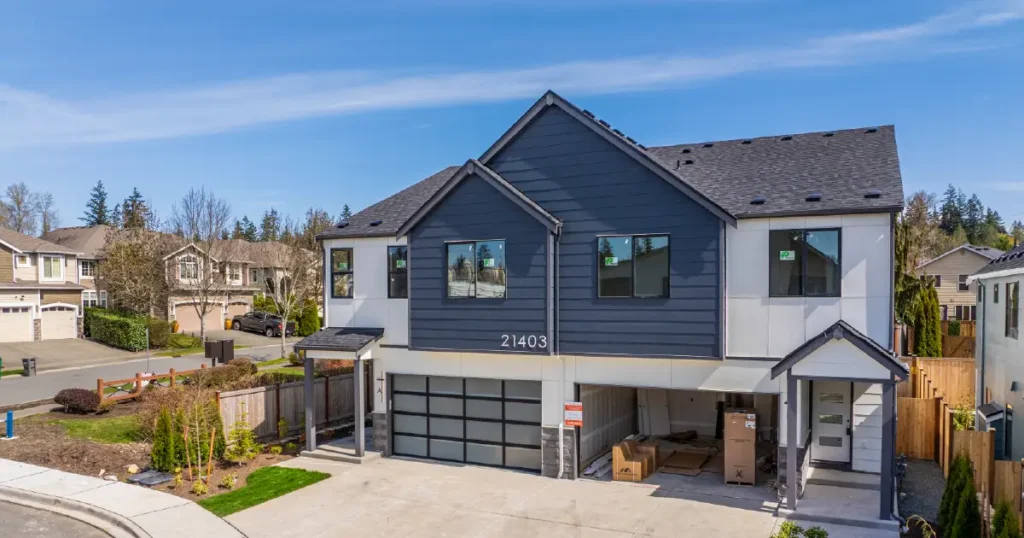
An investor owning several rental units decided to exit the portfolio. Rather than marketing each property, coordinating multiple showings, and dealing with tenant logistics, they used an iBuyer to sell one or more properties in bulk.
Because the investor deals in volume, having a single buyer (iBuyer) simplifies transaction logistics, closing scheduling, and handling multiple titles together.
Relevance: For investors or sellers with multiple homes, simplifying complexity and transaction coordination is a real benefit.
Example 4: Relocation from Another State

A homeowner accepting a job several states away wanted to sell before relocating, but couldn’t oversee showings frequently. They used an iBuyer in their local market, handled digital submission and remote inspection, and closed the sale before moving.
This allowed them to avoid managing contractors or showings from a distance.
Relevance: Remote or cross-state sellers benefit when they cannot be physically present for traditional listing oversight.
Benefits in Practice: What “Open Door Selling House” Solves
Let’s further unpack the tangible benefits, addressing common seller pain points and how iBuyer / OpenDoor helps alleviate them.
Pain: Uncertainty in Timing
Frequent delays in buyer financing, contingent offers, inspection negotiations, or market lulls make timing unpredictable.
Solution: With an iBuyer, you often know when you’ll close. That certainty helps in planning moves, purchases, or financial transitions.
Pain: Repair Costs & Upfront Capital
Many sellers must invest in repairs, staging, and cosmetic updates to attract buyers.
Solution: iBuyers often purchase as-is, deduct repair costs, or handle renovations themselves, eliminating your upfront capital burden.
Pain: Managing Showings & Occupied Homes
Coordinating open houses, dealing with tenant schedules, or maintaining show-ready conditions is disruptive.
Solution: The iBuyer model reduces or eliminates the need for repeated showings, giving you privacy and reducing hassle.
Pain: Dual Moves & Financing Gaps
If you buy first before selling, bridging costs or concurrent mortgages complicate finances.
Solution: Some iBuyers or hybrid models let you set closing dates flexibly, or offer bridging/cash advance features (in select models) to reduce overlap stress.
Pain: Selling from a Distance
If you live out of town or abroad, overseeing listing logistics is difficult.
Solution: The mostly digital nature of iBuyer platforms enables remote selling, inspections, and closings.
Pain: Market Volatility & Exposure
Holding a house during slow market periods exposes sellers to downside risk.
Solution: Because the iBuyer takes ownership immediately, you are shielded from further market downturns or holding costs.
When “Open Door Selling House” Is Not Ideal
While iBuyer is powerful, there are circumstances where traditional listing or hybrid strategies may outperform:
- If your home is a high-end luxury or ultra-unique property where bidders may pay premium multipliers, iBuyer algorithms may undervalue.
- If market demand is strong and multiple buyers compete, the bidding process may drive your sale price higher than an iBuyer would offer.
- If your home requires extensive, major structural repairs which make the inspection deductions too severe.
- If your home is outside supported markets or in regions the iBuyer does not cover.
- If you value negotiation flexibility and want to test the market rather than accept a fixed offer.
In such cases, combining listing with iBuyer backup or choosing an agent experienced with high-value homes may yield better net returns.
Best Practices & Seller Tips
To make the most of an iBuyer or “open door selling house” decision, keep the following in mind:
- Get multiple comparisons request offers from more than one iBuyer or get agent market estimates to benchmark.
- Review inspection adjustment details, insist on itemized deductions for repair; contest if discrepancies seem aggressive.
- Clarify fees and net proceeds, understand the service fee, title/escrow costs, and any holding or closing deductions.
- Time the closing wisely align the offer acceptance and closing with your next move so you minimize overlap or vacant homes.
- Read contract terms carefully, check for contingencies, exit rights, and post-closing occupancy (rent-back) provisions.
- Disclose any known issues for better transparency upfront, reducing surprises during inspection adjustment.
- Take advantage of hybrid options; some platforms permit listing concurrently or fallback options if the iBuyer offer is unsatisfactory.
Frequently Asked Questions
Q1: How much lower is an iBuyer / OpenDoor offer compared to a typical market sale?
It depends on the market, home condition, and demand. Many reports suggest iBuyer offers may be 5 % to 10 % (or more) below what a full market listing could net, factoring in negotiation, bidding, and premium offers.
Q2: Will I have to pay for repairs or inspections out of pocket?
Usually, no. The iBuyer inspection identifies needed repairs, and the cost is deducted from the offer. You generally won’t prepay or fund the repairs yourself.
Q3: Can I back out after accepting the offer?
Contract terms vary. Some iBuyer agreements allow cancellation within a limited window before closing, though you may incur penalties or forfeit inspection deposits. Always read the contract carefully before committing.